Kuwait Vision 2035: The Seven Pillars of "New Kuwait"
Inside Kuwait's plan to restore its historic role as a regional financial and trade hub.
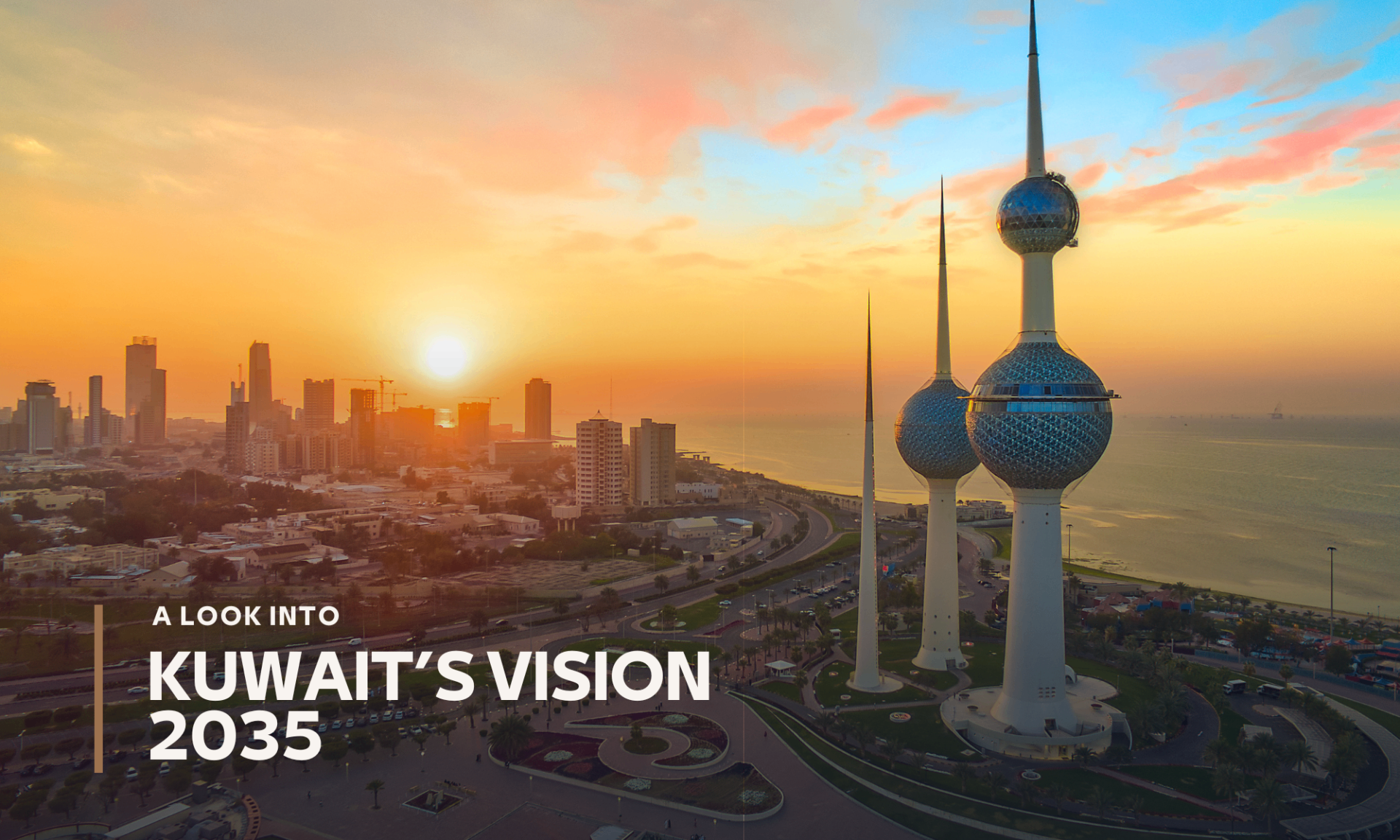
Inside Kuwait's plan to restore its historic role as a regional financial and trade hub.
Restoring a Historic Role
Kuwait Vision 2035, branded "New Kuwait," was set out under the late Amir Sheikh Sabah Al-Ahmad Al-Jaber Al-Sabah with a specific and somewhat unusual framing for a Gulf vision: rather than positioning Kuwait as an emerging player, the plan is explicitly about restoring the country's earlier regional leadership as a financial and trade hub, and reviving the private sector's role in driving development after decades of state-dominated economic activity.
The plan is linked formally to the UN Sustainable Development Goals 2030 agenda and uses global benchmarking indicators to track Kuwait's progress relative to other countries, with government performance and national resource allocation measured directly against the vision's goals.
The Main Aspirations
- Restore Kuwait's regional leadership as a financial and commercial hub, and revive the private sector's pivotal role in driving development
- Reconstruct the country's key institutions and government bodies, alongside workforce empowerment and productivity gains
- Build new infrastructure, modern legislation, and a business-enabling environment, while consolidating Kuwait's social identity, justice, and political participation
The Seven Pillars of the National Development Plan
- Sustainable diversified economy
- Effective civil service
- Sustainable living environment
- Developed infrastructure
- High quality healthcare
- Creative human capital
- Global positioning
Strategic Development Goals
- Increase local productivity and grow non-oil economic sectors
- Improve citizens' standard of living
- Engage the private sector more deeply in national economic activity
- Support human and social development
- Improve residential and housing policy
- Train and qualify national human resources
- Restructure government bodies to enable more effective administration
- Preserve Arab-Islamic identity and values
Flagship Projects: What's Being Built and Where
Kuwait's mega-project pipeline tied to Vision 2035 is concentrated in the Northern Gulf, anchored by a small number of large, named developments with a combined value well over KWD 100 billion.
- Madinat Al Hareer (Silk City) — a ~250 sq km mixed-use city planned for the Subiya peninsula, valued at more than $130 billion over a 25-year build-out, with financial, leisure, ecological, and residential quarters and the planned Burj Mubarak al-Kabeer tower
- Mubarak Al-Kabeer Port — a deep-water port on Boubyan Island designed as one of the region's largest shipping hubs, with a February 2025 completion contract awarded to China State Construction and Communications Corporation under Belt and Road cooperation
- Sheikh Jaber Al-Ahmad Al-Sabah Causeway — opened in 2019 as Silk City's first completed phase, linking Kuwait City to the Subiya development area
- Kuwait Islands Development — transforming the islands of Failaka, Boubyan, Warba, Miskan, and Awha into tourism, logistics, and investment hubs, valued at roughly KWD 49 billion
- Kuwait National Railroad Network and Kuwait International Airport Expansion — core transport-infrastructure projects supporting the Developed Infrastructure pillar
- South Sabah Al-Ahmad Residential Complex, Al-Sabah Hospital, and Subiya Power Plant Phase Four — named priority projects within Kuwait's FY2025–26 capital budget of ~KWD 1.3 billion across 141 active and new projects
Silk City is explicitly positioned as Kuwait's node on China's Belt and Road Initiative, intended to house up to 700,000 residents and create ~450,000 jobs as a private-sector-led trade and finance hub.
What This Means for Family Offices and Private Capital
Kuwait's vision is the most candid in the Gulf about the scale of the reform task ahead — it frames private-sector revival as something to be restored rather than newly built.
That reflects Kuwait's deep but underutilized legacy in regional banking and finance through institutions like National Bank of Kuwait and Kuwait Finance House. For investors, that legacy financial infrastructure is a genuine asset, but the vision's own emphasis on reconstructing government bodies and enabling legislation signals that institutional and parliamentary reform pace remains the key risk variable to watch relative to faster-moving neighbors.
The pillars covering developed infrastructure and high-quality healthcare point to specific gaps — and specific opportunities — for private capital and public-private partnership structures, particularly as Kuwait works to close the infrastructure gap that has opened up relative to the UAE, Saudi Arabia, and Qatar over the past decade.
Key Takeaways
- Kuwait Vision 2035 ("New Kuwait") is framed as restoring, not building from scratch, Kuwait's regional financial and trade leadership
- The plan rests on seven pillars, from a diversified economy to global positioning
- Kuwait's historic banking and finance base is a real asset for investors, but institutional reform pace is the key risk to monitor
- Infrastructure and healthcare are the pillars most likely to require — and reward — private and public-private capital