Qatar National Vision 2030: A Breakdown of the Four Pillars
Inside the development blueprint that has guided Doha's economic and social planning since 2008.
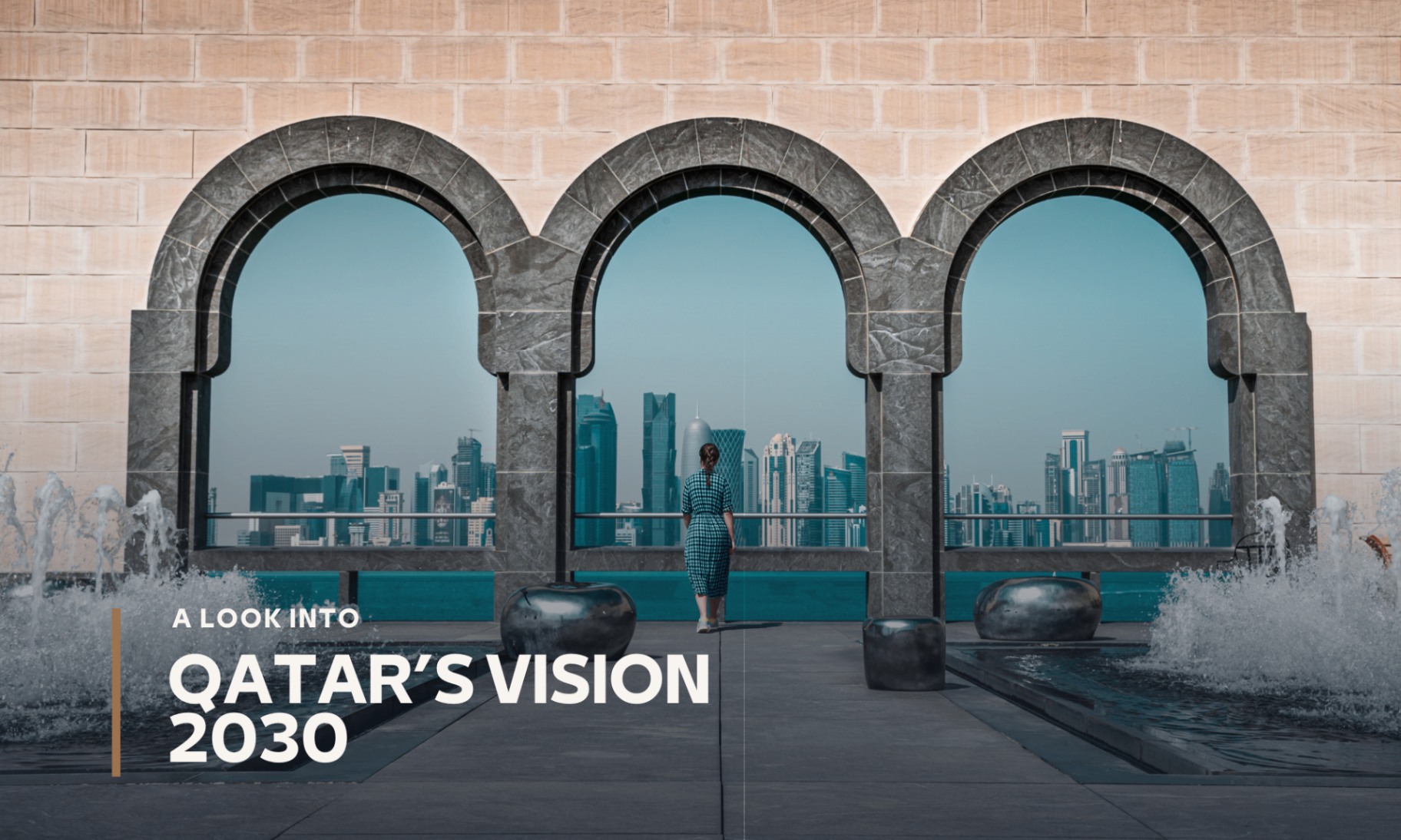
Inside the development blueprint that has guided Doha's economic and social planning since 2008.
Origins and Purpose
Published in July 2008 by Qatar's General Secretariat for Development Planning, the Qatar National Vision 2030 is one of the earliest comprehensive Gulf development blueprints. It was framed by then-Emir Sheikh Hamad bin Khalifa Al-Thani and grounded explicitly in Qatar's Permanent Constitution, which guarantees economic freedom, social justice, and a balance between private and public economic activity.
Rather than prescribe specific projects, the National Vision sets long-term outcomes and leaves implementation to a subsequent National Development Strategy — a structure Qatar has since repeated across successive strategy cycles. The Vision explicitly names five tensions Qatar must manage on the path to 2030: modernization versus preservation of tradition, current versus future generations, managed growth versus uncontrolled expansion, the size and quality of the expatriate labor force, and economic growth versus environmental protection.
The Four Pillars
1. Human Development
- An educated population — a world-class educational system tied to labor-market needs, with sustained public and private funding for scientific research
- A healthy population — an integrated, accessible healthcare system covering physical and mental health
- A capable and motivated workforce — increased Qatari labor-force participation alongside a targeted, well-protected expatriate workforce
2. Social Development
- Social care and protection — a civil society and public institutions that preserve heritage, empower women in decision-making, and promote tolerance
- A sound social structure — cohesive families supported by a national social-protection system
- International cooperation — a stronger regional role through the GCC, Arab League, and broader diplomacy
3. Economic Development
- Sound economic management — financial stability, low inflation, and a business climate that attracts foreign investment
- Responsible exploitation of oil and gas — balancing reserves and production while building a world-class gas industry
- Suitable economic diversification — reducing hydrocarbon dependence, strengthening the private sector, and building a knowledge-based economy
4. Environmental Development
- A balance between development needs and environmental protection — including sustainable urban planning and a regional role in addressing climate change
Flagship Projects: What's Being Built and Where
Qatar's National Vision is implemented through successive National Development Strategies, and the current, third strategy (2023–2030) is producing a specific pipeline of named projects and financial-sector reforms rather than general commitments.
- North Field LNG expansion — the world's largest natural gas field, central to Qatar's non-oil and energy-diversification revenue base
- Lusail City — a purpose-built smart city north of Doha integrating Islamic design principles, smart energy systems, and residency-through-property pathways for foreign investors
- Doha Metro and the Lusail Tram — a multi-billion-dollar rail network managed by Qatar Rail; the Lusail Tram alone has carried more than 5.5 million riders since 2022
- Qatar Free Zones Authority (QFZA) — purpose-built zones for logistics, technology, and manufacturing investment, alongside the Qatar Financial Centre (QFC) for financial-services licensing
- Third Financial Sector Strategy — launched by the Qatar Central Bank in November 2023 to deepen financial-sector development in direct support of the National Vision
- Al Kharsaah Solar Power Plant — Qatar's flagship operational solar asset, with further solar and hydrogen projects opened to public-private partnership
- Kahramaa's Third Phase Strategy (2026–2030) — the national utility's next long-term phase focused on energy and water security
Many sectors now permit full foreign ownership, and entry structures run through QFZA, the QFC, or a mainland Ministry of Commerce and Industry registration — giving investors several distinct legal pathways depending on sector and structure.
What This Means for Family Offices and Private Capital
Qatar's National Vision is unusual among Gulf visions in how directly it names the risks of hydrocarbon-financed growth — inefficient use of financial returns, costly prestige projects, and economic overheating — and commits to a development pace calibrated against real economic capacity rather than the size of the state's balance sheet.
That discipline is relevant context for investors evaluating Qatar Investment Authority-linked opportunities and the broader pace of domestic private-sector deal flow.
The Vision's economic pillar explicitly calls for training and financial support mechanisms for entrepreneurs and SMEs as a precondition for a credible private sector — a signal carried through Qatar's subsequent National Development Strategies and reflected in the incubator, accelerator, and SME financing initiatives that family offices and venture investors can plug into.
Key Takeaways
- Qatar National Vision 2030 rests on four pillars: Human, Social, Economic, and Environmental Development
- It is grounded directly in Qatar's Permanent Constitution rather than a standalone economic strategy
- Economic diversification and SME support are explicitly named as preconditions for a credible, sustainable private sector
- The Vision itself sets outcomes only — implementation flows through subsequent National Development Strategies, the layer investors should track for near-term opportunity